

With the release of each iteration of OpenAI’s large language models, there comes a wave of excitement and curiosity. One of the most talked-about topics with the release of ChatGPT-5 has been its ability to handle more context—more specifically, whether it has a significantly higher token limit than its predecessors. This article dives deep into what token limits actually are, how they impact usage, and whether ChatGPT-5 pushes the boundaries further than previous versions.
Contents of Post
TL;DR
Yes, ChatGPT-5 does feature a higher token limit compared to earlier versions like GPT-3.5 and GPT-4. With its increased capacity, users can engage in longer conversations, submit larger documents, or process more detailed instructions. This enhancement significantly improves the AI’s ability to maintain context and coherence over extensive interactions. Let’s explore what this means in practical terms and how it benefits users.
What Are Tokens and Why They Matter
Before diving into token limits, it’s important to understand what a “token” is in the world of language models.
In natural language processing (NLP), a token is a piece of a text string—a few characters that usually represent a word or punctuation. For example:
- The word “ChatGPT” might be one token.
- A word like “antidisestablishmentarianism” might be split into multiple tokens.
- Even punctuation marks like periods and commas count as tokens.
Token limits define the model’s maximum amount of input and output it can handle in a single interaction. If you input a long message or ask for a lengthy output like an essay or codebase, the total number of tokens from both input and output has to fall within this limit.
How the Token Limit Evolved Over Time
The token limit has seen significant upgrades through the generations of OpenAI models:
- GPT-3.5: Up to 4,096 tokens
- GPT-4 (original): Initially up to 8,192 tokens, with later versions supporting 32,768 tokens
- GPT-4 Turbo: Known for supporting up to 128,000 tokens
Now, with ChatGPT-5, expectations have been high—and OpenAI has not disappointed.
ChatGPT-5: What Is the New Token Limit?
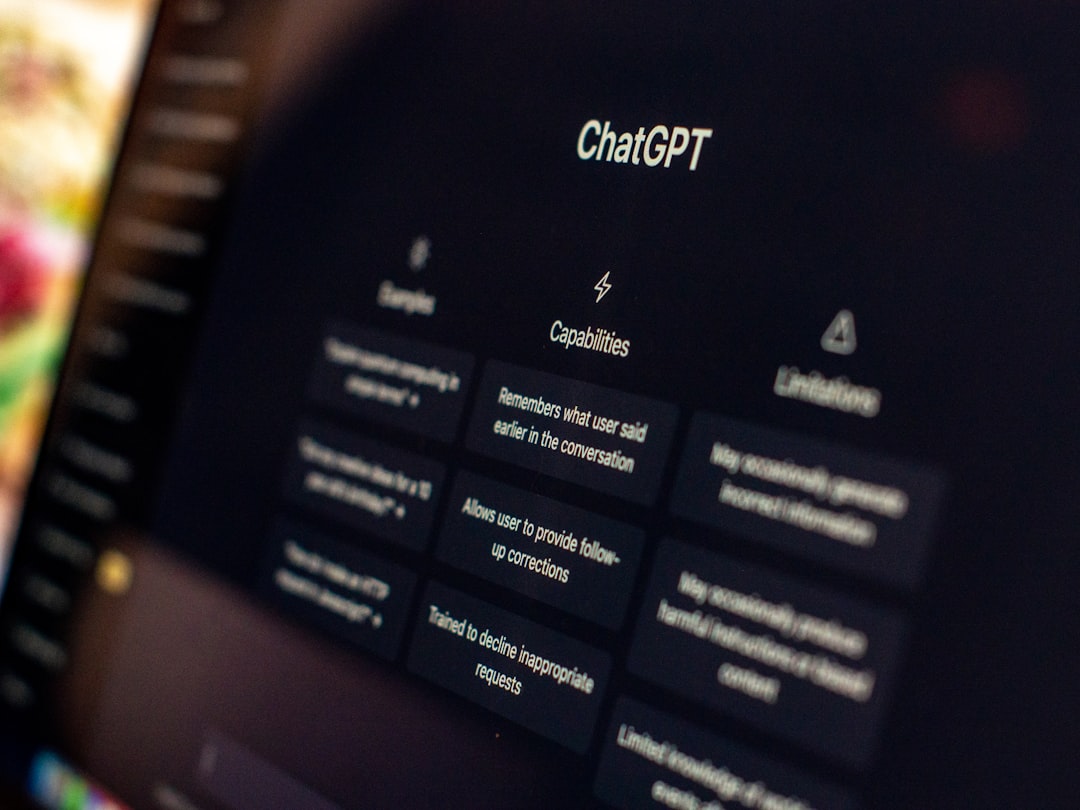
ChatGPT-5 steps up the game with a token limit of up to 256,000 tokens, a massive leap from even the already impressive 128,000 tokens available in GPT-4 Turbo.
This new ceiling allows for significantly more complex tasks that involve longer documents, extensive codebases, or deeper multi-step reasoning without losing track of context. Just to give you a sense of scale, 256,000 tokens could represent approximately 200,000 words — that’s roughly the length of two entire novels!
Why Does a Higher Token Limit Matter?
The practical implications of a higher token limit are profound and include the ability to:
- Engage in deeper, multi-turn conversations without forgetting earlier messages in the exchange.
- Analyze and summarize large PDF documents or long articles in one go.
- Develop and debug large codebases with better understanding and consistency.
- Handle complex business logic or legal contracts that span tens of thousands of words.
This lengthens the AI’s “memory” in a single session and enhances its usefulness in professional, academic, and creative workflows.
Use Cases That Benefit From Expanded Token Limits
Here are some direct examples of how teams and individuals benefit from this extended context capability:
- Legal Professionals: Can input an entire contract (or several) for review, comparisons, or summarization.
- Students & Researchers: Upload full research papers and ask for detailed breakdowns or connections to wider theory.
- Software Developers: Provide the model access to hundreds of files or thousands of lines of code to detect bugs or refactor logic.
- Marketing Teams: Craft comprehensive campaigns by feeding in all strategy documents, past content, and market research.
Is There a Trade-Off with Larger Token Contexts?
While access to more tokens undoubtedly expands the model’s capabilities, it’s worth noting a few caveats:
- Processing Time: It might take slightly longer to process very long inputs.
- Cost: Using a larger number of tokens often comes at a higher computational and financial cost, especially for API users.
- Specificity: If not guided well, the model might be “distracted” by an overly large context and produce less focused answers.
Despite these considerations, for most advanced use cases, the benefits far outweigh the drawbacks.
How Does ChatGPT-5 Manage This Context Effectively?
Simply increasing the token limit doesn’t automatically make the model smarter—it needs to know how to manage that information. One of the core innovations in ChatGPT-5 is its enhanced ability to selectively prioritize relevant details within its input, allowing it to maintain coherent answers across vastly more content.
It achieves this through:
- Optimized attention mechanisms that focus computational resources on more relevant sections of the text.
- Fine-tuned summarization of past messages within the same session to reduce memory overload.
- Chunk-aware reasoning, where it divides and organizes inputs for better segmented comprehension.
Where Can You Access These Extended Capabilities?
At the time of writing, the expanded token capacity in ChatGPT-5 is available to:
- ChatGPT Plus and Enterprise users through OpenAI’s official chat interface.
- API users through model endpoints that support ChatGPT-5, depending on the developer tier.
If you’re building an application that involves document processing, customer support chatbots, or AI tutors, tapping into this extended token capacity can enhance customer experience and efficiency.
How Does It Compare with Competitors?
ChatGPT-5’s release has also put pressure on competing models like Google’s Gemini, Anthropic’s Claude, and Meta’s LLaMA. While some of these offer large token windows, ChatGPT-5’s 256,000-token capacity is currently among the highest publicly available, with OpenAI also leading the pack in real-world implementation & application reliability.
Conclusion: The Future Is Context-Rich
ChatGPT-5’s higher token limit isn’t just a spec on a feature list—it’s a practical leap that opens new realms of dialog, creativity, and problem-solving. By enabling longer interactions and more data-intensive tasks, it sets the stage for AI to become an even more capable, context-aware assistant across industries.
As large language models continue to evolve, we can expect that token handling, context memory, and a deeper understanding of structured data will become standard expectations. For users already pushing the boundaries of what language models can do, ChatGPT-5’s increased token limit is not just exciting—it’s empowering.