
Self-driving cars do not learn to drive on real roads first. That would be risky. Instead, they learn inside powerful virtual worlds. These worlds look like cities, highways, and parking lots. They follow real physics. Tires grip the road. Rain makes things slippery. Sun glare blinds sensors. All inside a computer. In this article, we explore three autonomous vehicle simulation software platforms that use physics-based modeling to make that magic happen.
TLDR: Autonomous vehicle simulation platforms help self-driving cars learn in safe virtual environments. The best ones use physics-based modeling to simulate real-world forces like friction, gravity, and collisions. Three standout platforms are CARLA, NVIDIA DRIVE Sim, and LGSVL (SVL Simulator). Each has strengths, from open-source flexibility to ultra-realistic sensor modeling.
Contents of Post
Why Physics-Based Modeling Matters
Before we jump into the tools, let’s get one thing straight. Not all simulations are equal.
A basic simulator might animate cars moving around. That’s fine for games. But for autonomous vehicles, that is not enough.
Self-driving systems must understand:
- Acceleration and braking forces
- Tire friction and slip angles
- Weight transfer during turns
- Sensor noise and distortion
- Collisions and object dynamics
This is where physics-based modeling comes in. It simulates how objects move and interact in the real world. Gravity pulls. Momentum pushes. Rain reduces traction. Everything behaves like it should.
That realism is crucial. Because what a car learns in simulation should work in reality.
1. CARLA
Best for: Research and academic development.
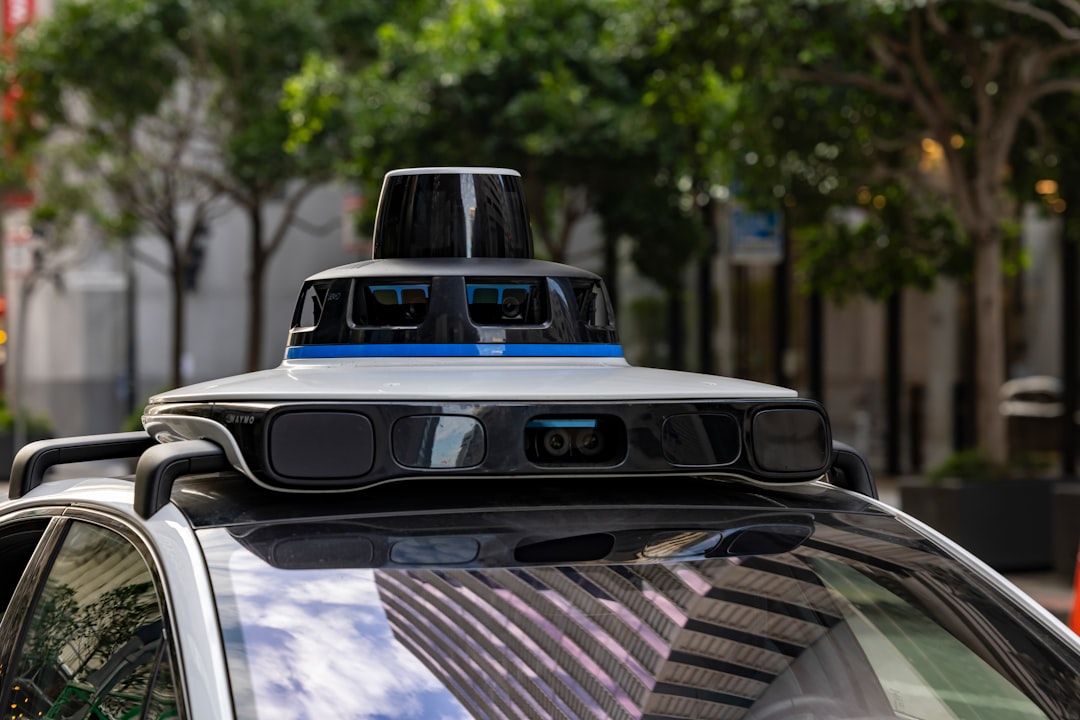
CARLA is one of the most popular open-source autonomous driving simulators. It was developed by researchers. And researchers love it.
It runs on Unreal Engine. That means the visuals are impressive. But what makes CARLA powerful is its physics backbone.
What Makes CARLA Special?
- Open-source and highly customizable
- Realistic vehicle dynamics
- Advanced sensor simulation
- Large community support
CARLA models vehicle behavior using detailed physics parameters. You can tweak mass, torque curves, suspension stiffness, and tire friction.
Want to simulate a snowy road? You can.
Want to test emergency braking on a downhill slope? Go for it.
It also supports many sensors:
- Cameras (RGB and depth)
- LIDAR
- Radar
- GPS
- IMU
And these sensors behave realistically. LIDAR reflects off surfaces. Cameras respond to lighting changes. Noise can be injected.
That makes CARLA perfect for developing perception and control algorithms.
Who Uses CARLA?
Universities. Startups. Research labs. Anyone who wants flexibility without heavy licensing costs.
The downside? It requires technical skill. Setup can be complex. Not exactly plug-and-play.
But if you like control and customization, CARLA is a powerhouse.
2. NVIDIA DRIVE Sim
Best for: Enterprise-grade development and high-fidelity sensor simulation.
NVIDIA DRIVE Sim feels like the Hollywood studio of simulation platforms.
It is built on NVIDIA Omniverse. That means stunning graphics and extremely accurate physics.
But this is not about pretty visuals. It is about precision.
What Makes NVIDIA DRIVE Sim Special?
- Physically accurate sensor simulation
- Ray-traced LIDAR and camera models
- Digital twin environments
- Cloud-scale simulation
One major advantage is its use of ray tracing. This allows light and laser signals to bounce off surfaces exactly like in real life.
Why does that matter?
Because perception systems depend on how light interacts with objects. Reflective trucks. Dark asphalt. Fog. Glass buildings. DRIVE Sim recreates these details with extreme accuracy.
It also supports large-scale testing. Thousands of scenarios can be run in parallel in the cloud.
That is critical for safety validation. Autonomous vehicles must drive millions of virtual miles before they hit real roads.
Digital Twins
NVIDIA DRIVE Sim allows companies to build digital twins of real cities.
A digital twin is an exact virtual replica of a physical environment.
Imagine copying downtown San Francisco into a simulator. Same streets. Same traffic lights. Same slopes.
Then test edge cases over and over again.
That is powerful.
Who Uses NVIDIA DRIVE Sim?
Major automotive companies. Large tech firms. Teams with serious budgets.
It is not open-source. It is enterprise-focused. But the realism is next level.
3. LGSVL (SVL Simulator)
Best for: Integration testing with real autonomous stacks.
LGSVL, now known as SVL Simulator, is another strong contender.
It was designed with autonomy software integration in mind.
In simple words, it plays well with others.
What Makes SVL Simulator Special?
- Built-in integration with Autoware and Apollo
- Unity-based realistic environments
- Detailed vehicle and sensor physics
- User-friendly interface
SVL focuses heavily on bridging simulation and real-world deployment.
You can connect it directly to real autonomous driving stacks. That means the same software running in a vehicle can run inside the simulator.
That makes testing smoother.
Its physics engine simulates:
- Rigid body vehicle motion
- Suspension systems
- Environmental conditions
- Traffic participant behavior
It may not have the hyper-realistic ray tracing of NVIDIA. But it strikes a balance between realism and usability.
Who Uses SVL?
Developers working with open autonomous stacks. Robotics teams. Companies testing full software pipelines.
It is practical. Efficient. Developer-friendly.
Comparison Chart
| Feature | CARLA | NVIDIA DRIVE Sim | SVL Simulator |
|---|---|---|---|
| License | Open-source | Enterprise коммерical | Open-source |
| Graphics Engine | Unreal Engine | Omniverse | Unity |
| Physics Realism | High | Very High | High |
| Sensor Fidelity | Advanced | Ultra-precise with ray tracing | Advanced |
| Cloud Scalability | Moderate | Excellent | Moderate |
| Ease of Use | Technical | Enterprise-focused | User-friendly |
| Best For | Research | Large-scale validation | Stack integration testing |
How to Choose the Right Platform
Choosing a simulator is like choosing a gym.
What are your goals?
- If you are doing academic research, CARLA is fantastic.
- If you are building production vehicles at scale, NVIDIA DRIVE Sim shines.
- If you want tight integration with autonomy software stacks, SVL Simulator is a smart pick.
Also consider:
- Your budget
- Your technical expertise
- Your hardware resources
- Your validation requirements
Some teams even use multiple simulators. One for perception. One for validation. One for integration testing.
That is not overkill. That is safety.
The Big Picture
Autonomous vehicles must handle rare and dangerous situations.
A child running into the street.
A truck dropping cargo.
A sudden snowstorm.
Testing these events in real life is expensive. And risky.
In simulation, you can trigger them instantly.
Again. And again. And again.
Physics-based modeling ensures the car’s response is grounded in real-world behavior.
No shortcuts. No cartoon logic.
Just math. Forces. Light. Motion.
As computing power increases, simulations get closer to reality.
And one day, the line between virtual testing and real-world driving may almost disappear.
Final Thoughts
Simulation is not just a tool. It is the training ground for autonomous intelligence.
CARLA gives researchers control. NVIDIA DRIVE Sim delivers extreme realism. SVL Simulator focuses on integration.
All three rely heavily on physics-based modeling. That is the secret sauce.
Because at the end of the day, cars must obey physics.
And the better we simulate physics, the safer our roads will become.