
Imagine pointing your phone at a pair of shoes and instantly finding out where to buy them. Or uploading a photo of a plant and learning its name in seconds. That magic trick is called AI visual search. It feels futuristic. But the way it works is easier to understand than you might think.
TLDR: AI visual search lets computers understand and find things inside images. It works by turning pictures into data, spotting patterns, and comparing them to millions of other images. Machine learning models are trained to recognize shapes, colors, objects, and even context. The result is fast, smart image-based search that feels almost human.
Let’s break it down step by step. No robotics degree required.
Contents of Post
Step 1: Turning Pictures into Numbers
Computers do not see like we do. They do not see “a red dress.” They see numbers.
Every image is made of tiny dots called pixels. Each pixel carries information about:
- Color
- Brightness
- Position
When you upload a photo, the AI converts it into a giant grid of numbers. Think of it like translating a picture into a secret math language.
The higher the image quality, the more pixels. The more pixels, the more data.
But raw pixel data is messy. So the AI needs to simplify it.
Step 2: Finding Patterns in the Chaos
This is where machine learning comes in.
Visual search systems use something called a convolutional neural network (CNN). That sounds scary. But here’s the simple version:
A CNN is software that scans an image in small sections. It looks for patterns. Over and over.
At first, it detects simple things:
- Edges
- Lines
- Curves
- Color changes
Then it combines those into bigger ideas:
- Shapes
- Textures
- Objects
Finally, it recognizes full items like:
- Dogs
- Chairs
- Cars
- Faces
It learns this by training on millions of labeled images.
For example, if you show it 10 million pictures labeled “cat,” it starts noticing what cats usually look like. Pointy ears. Whiskers. Certain face shapes. Over time, it gets better and better.
Step 3: Creating a “Feature Map”
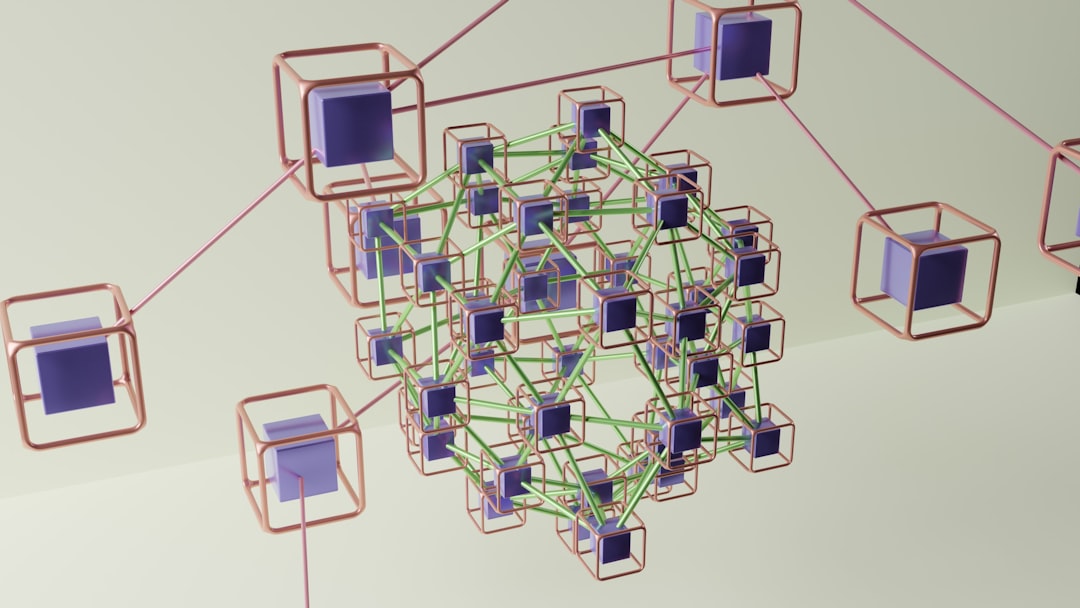
Once the AI understands what’s inside the image, it creates something called a feature vector.
Think of this as a fingerprint for the image.
This fingerprint does not store the full picture. Instead, it keeps important details like:
- Object types
- Shape patterns
- Color distribution
- Texture style
It might look like a long list of numbers. But those numbers represent meaning.
For example:
- High value for “round shape”
- Medium value for “bright red color”
- Low value for “metal texture”
This makes searching much faster. Instead of comparing full images, the system compares these compact fingerprints.
Step 4: Searching for Matches
Now comes the fun part.
When you upload a picture, the AI compares its fingerprint to millions (or billions) of stored fingerprints.
It calculates something called similarity score.
The closer the fingerprints match, the higher the score.
This process happens in seconds.
That is why you can:
- Take a picture of a jacket and find similar ones online
- Snap a photo of furniture and find matching pieces
- Upload artwork and discover its artist
The system ranks results from most similar to least similar.
How AI Understands Context
Here’s where things get even smarter.
Modern visual search does not just recognize objects. It understands context.
For example, imagine a photo of:
- A person holding a coffee cup
- Sitting at a wooden desk
- With a laptop open
The AI can recognize multiple objects at once. It understands relationships between them.
This is possible through something called object detection.
Instead of analyzing the whole image as one block, the AI draws invisible boxes around different objects. Then it labels each one.

This allows more detailed search. You could search for:
- “White ceramic coffee mug”
- “Minimalist wooden desk setup”
- “Slim silver laptop”
The AI isolates each object and makes targeted matches.
Training: How AI Gets So Smart
AI visual search systems are not born smart. They are trained.
Training involves three main ingredients:
- Data
- Labels
- Feedback
First, developers feed the AI millions of images.
Second, humans label those images correctly.
For example:
- This is a sneaker.
- This is a golden retriever.
- This is modern architecture.
Third, the AI makes predictions. If it guesses wrong, the system corrects it. The model adjusts.
This adjustment process is called backpropagation. Think of it like fine-tuning a guitar. Each correction makes the sound better.
Over time, error rates shrink. Accuracy improves.
Visual Search vs. Image Recognition
These two terms are related. But not identical.
Image recognition answers:
“What is in this image?”
Visual search answers:
“Find me more like this.”
Recognition identifies objects. Search compares and retrieves similar results.
Visual search builds on recognition technology. It adds large-scale comparison and database matching.
Where Visual Search Is Used Today
You might already be using it.
Here are some common applications:
1. Shopping
- Find clothing from a screenshot
- Match furniture styles
- Discover similar products
2. Nature and Education
- Identify plants
- Recognize animals
- Analyze historical artifacts
3. Security
- Face recognition
- License plate scanning
4. Healthcare
- Analyzing medical scans
- Detecting abnormalities in X-rays
5. Social Media
- Auto-tagging photos
- Finding similar visual content

Why It Feels So Fast
Comparing billions of images sounds slow. But it is not.
Here’s why:
- Images are converted into compact fingerprints.
- Databases are optimized for quick comparison.
- Special hardware accelerates calculations.
- Cloud computing spreads work across many servers.
This combination makes search almost instant.
The Secret Ingredient: Embeddings
There is one more important concept: embeddings.
An embedding is a way of representing images in a multi-dimensional space.
Imagine a giant 3D map. Except instead of three dimensions, there are hundreds.
Similar images sit close together. Very different images are far apart.
If you upload a photo of a red sneaker, the AI finds nearby data points in this space. Those nearby points represent similar products.
This is how similarity becomes measurable.
Challenges AI Still Faces
AI visual search is powerful. But it is not perfect.
Some challenges include:
- Lighting differences
- Blurry images
- Unusual angles
- Occlusion (objects partially hidden)
- Bias in training data
If the system was trained mostly on certain styles or regions, it may struggle with others.
That is why diverse training data matters.
The Future of Visual Search
Visual search is getting smarter every year.
Newer systems combine:
- Text understanding
- Voice input
- Image analysis
You will be able to say:
“Find me a couch like this, but in blue and under $500.”
The AI will combine:
- The uploaded image
- Your voice request
- Product listings
- Pricing filters
All at once.
This is called multimodal AI. It works across different types of data.
Putting It All Together
So how does AI visual search really work?
Here’s the simple flow:
- You upload a photo.
- The AI converts it into numbers.
- A neural network finds patterns.
- It creates a feature fingerprint.
- The system compares that fingerprint to millions of others.
- You get ranked results in seconds.
Behind the scenes, it is math. Data. Pattern recognition.
But to us, it feels like magic.
And that is the beauty of good technology.
It hides the complexity and gives us simplicity.
The next time you snap a photo to search for something, remember: your device is not just looking at a picture. It is reading a language made of patterns, shapes, and connections.
AI visual search does not actually see.
But it understands more every day.