
Artificial intelligence writing once sounded like science fiction, but today it powers chatbots, search engines, email assistants, and content tools used by millions of people. Behind the smooth sentences and coherent paragraphs lies a complex learning process that teaches machines to recognize patterns in language. While the technology is sophisticated, the core ideas behind it can be explained in simple and approachable terms. Understanding how AI learns to write like humans helps demystify the process and builds trust in how these systems operate.
TLDR: AI learns to write by analyzing massive amounts of human-written text and identifying patterns in grammar, structure, and meaning. It uses mathematical models called neural networks to predict which words should come next in a sentence. Through repeated training and adjustment, it gradually improves its accuracy. Although AI can produce human-like writing, it does not think or understand language the way humans do.
Contents of Post
1. The Foundation: Learning from Data
At the heart of AI writing systems is data. Just as humans learn language by reading books, listening to conversations, and practicing writing, AI models learn by analyzing enormous collections of text. These datasets may include books, articles, websites, and other publicly available written materials.
The process works like this:
- The AI is shown billions of sentences.
- It studies how words are arranged.
- It detects patterns such as grammar rules, tone, structure, and style.
For example, after seeing thousands of examples of the phrase “How are you today?” the model learns that “today” is a common word at the end of that type of question. It does not “understand” the question emotionally; it simply recognizes the statistical likelihood of words appearing together.
Think of it as advanced pattern recognition. The system continuously asks itself: Given these words, what word is most likely to come next?

2. Neural Networks: The Engine Behind the Writing
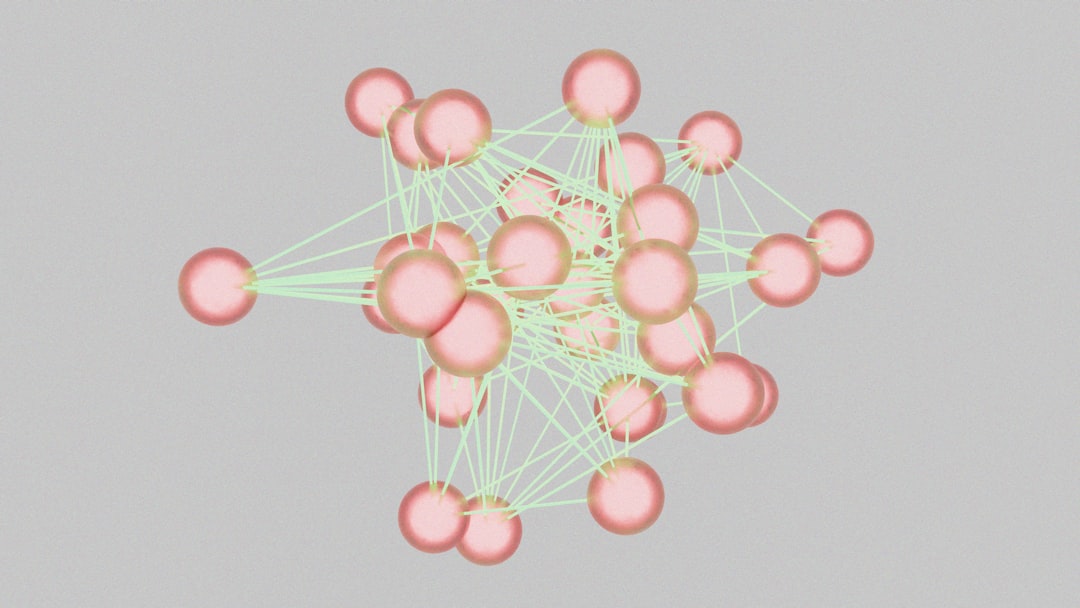
The core technology that enables AI writing is called a neural network. Despite the name, it does not function exactly like a human brain, but it is inspired by how neurons connect and transmit signals.
A neural network consists of layers:
- Input layer – receives words or tokens (small pieces of language).
- Hidden layers – analyze patterns and relationships.
- Output layer – predicts the next word.
Modern writing systems often use a specialized form called a transformer model. Transformers are particularly good at understanding context. They can analyze not just the last word in a sentence, but the broader relationship between many words at once.
For instance, in the sentence:
“The cat, which was hiding under the table, suddenly ran outside.”
The model must connect “cat” with “ran” even though several words are in between. Transformer models are designed to track these long-range relationships more effectively than earlier systems.
3. Training: Practice Makes (Almost) Perfect
Once the structure of the neural network is defined, it must be trained. Training is a computationally intensive process that can take weeks or months on powerful computer systems.
Here is a simplified breakdown of training:
- The model reads a sentence with one word hidden.
- It attempts to predict the missing word.
- Its prediction is compared to the correct word.
- The system calculates how far off it was.
- Internal parameters are adjusted slightly to improve accuracy.
This cycle repeats billions of times. Each adjustment is small, but collectively they refine the system’s ability to generate coherent language.
This process is guided by mathematics. Specifically, the model minimizes something called a loss function, which measures prediction error. Over time, lower error means better performance.
4. Tokens: How AI Sees Words
Humans see full words. AI often works with tokens, which can be words, parts of words, or even punctuation marks.
For example:
- “Unbelievable” might be split into “Un”, “believ”, “able.”
- “Don’t” could become “Do” and “n’t.”
This system allows AI to handle unfamiliar words more effectively. If it encounters a new word like “hyperautomation,” it may break it into smaller, recognizable parts and infer meaning patterns.
By processing tokens instead of full words only, AI gains flexibility in working with language variations and new vocabulary.
5. Context: The Key to Human-Like Writing
One reason modern AI seems more natural than earlier systems is its ability to maintain context. Context means understanding how earlier parts of text influence later parts.
For example:
“Maria picked up her violin. She tightened the bow and began to play.”
The AI needs to connect “violin” with “bow” and “play.” Without context modeling, the text would become disjointed.
Transformers use a mechanism called attention. Attention allows the model to “focus” on important words in a sentence when generating the next word. In simple terms, it weights certain words more heavily when deciding what comes next.

Attention mechanisms are one of the main breakthroughs that improved AI writing quality in recent years.
6. Fine-Tuning: Improving Tone and Safety
After initial training on broad datasets, many AI systems undergo fine-tuning. This step refines behavior according to specific goals.
Fine-tuning can help with:
- Encouraging clear and helpful responses.
- Reducing biased or harmful output.
- Adapting tone to be professional or conversational.
Sometimes human reviewers provide feedback by ranking multiple responses. The AI then adjusts its predictions to align more closely with preferred answers. This process helps the system generate more reliable and context-appropriate text.
7. Why AI Writing Sounds Convincing
AI-generated text can feel human because it reproduces recognizable patterns in:
- Sentence rhythm
- Paragraph structure
- Logical flow
- Common expressions
If millions of articles begin with an introduction, follow with structured headings, and end with a summary, the AI learns that this format is statistically common. It mirrors those structures convincingly.
However, it is important to emphasize a critical point: AI does not possess consciousness or genuine understanding. It does not experience emotions, beliefs, or intent. It predicts text based on probability distributions learned during training.
8. An Example: Step-by-Step Sentence Generation
Let us examine a simple prompt:
“The future of transportation is”
The AI evaluates possible next words by probability. It might calculate something like:
- “electric” – 35% probability
- “rapidly” – 20% probability
- “uncertain” – 12% probability
If it selects “electric,” the sentence becomes:
“The future of transportation is electric”
Now it repeats the same process for the next word. Word by word, sentence by sentence, paragraph by paragraph, the text emerges.
This iterative prediction explains both the strength and the limitation of AI writing. It excels at producing likely continuations, but it may struggle with tasks requiring deep reasoning or real-world verification.

9. Limitations and Misconceptions
Despite impressive capabilities, AI writing systems have clear boundaries:
- No real understanding: It does not comprehend meaning the way humans do.
- Potential inaccuracies: It can generate confident but incorrect statements.
- Dependence on training data: Knowledge reflects patterns in past data, not live awareness.
Because the system predicts likelihood rather than checking facts against a live database, users should approach outputs critically. Verification remains important, especially in professional or academic contexts.
10. Why This Matters
Understanding how AI learns to write helps reduce misunderstanding and unrealistic expectations. These systems are powerful tools for:
- Drafting content
- Generating ideas
- Automating routine communication
- Supporting research and brainstorming
They are not replacements for human judgment, ethics, or expertise. Instead, they function best as collaborative assistants.
In practical terms, AI writing is the result of large-scale data analysis, advanced mathematical modeling, and extensive training. Through exposure to language patterns, neural networks become highly skilled at predicting coherent sequences of text. The result can appear creative, persuasive, and structured—yet it remains rooted in probability rather than consciousness.
As AI continues to evolve, its writing will likely become even more refined. However, the fundamental principle will remain the same: it learns by studying how humans write and then estimating what a human is likely to say next.
In summary, AI writes like humans not because it thinks like humans, but because it has learned the statistical architecture of human language. By combining massive datasets, transformer models, and continuous training adjustments, it produces text that feels natural and organized. Recognizing both its capabilities and its limits allows us to use this technology responsibly and effectively.