

Many software teams evaluate Pendo for product analytics, customer feedback, and user behavior insights, but not every organization needs its product guidance, onboarding tours, or in-app walkthrough capabilities. Some companies already have a separate onboarding tool, prefer a lighter analytics stack, or want deeper specialization in areas such as session replay, event tracking, customer health scoring, or qualitative feedback. For those teams, the best Pendo competitors are platforms that focus on understanding users rather than guiding them through the product.
TLDR: The best Pendo competitors without product guidance and walkthrough features are tools that specialize in product analytics, behavioral tracking, session replay, feedback, or customer intelligence. Strong options include Amplitude, Mixpanel, Heap, FullStory, Hotjar, LogRocket, PostHog, and Gainsight PX when guidance is not the priority. These platforms are ideal for teams that want to analyze adoption, detect friction, improve retention, and understand customer behavior without investing in built-in onboarding flows.
Contents of Post
Why Companies Look for Pendo Alternatives Without Guidance Features
Pendo is widely known for combining product analytics, user feedback, roadmapping, and in-app guides. That makes it attractive for product-led teams that want both measurement and user engagement in one platform. However, the breadth of the platform can also make it more than some teams need.
A company may look for a Pendo competitor without product guidance features for several reasons. It may already use a dedicated onboarding solution, customer success platform, or help center widget. It may prefer to keep the product interface free from popups and guided tours. It may also need more advanced analytics, stronger event governance, better session replay, or more flexible data ownership than Pendo provides.
In these cases, the ideal alternative is not necessarily a direct clone of Pendo. Instead, it is a focused product intelligence tool that helps teams answer questions such as: Which features are users adopting? Where do customers drop off? What behaviors predict retention? Which product experiences create confusion?
1. Amplitude
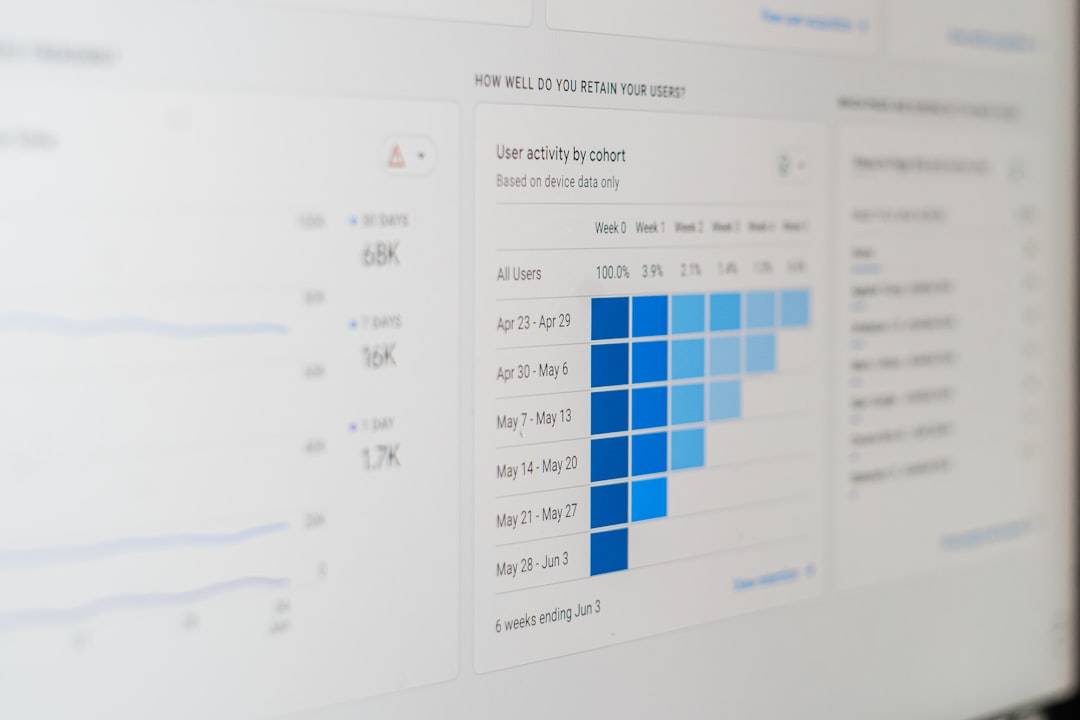
Amplitude is one of the strongest Pendo competitors for companies that care primarily about product analytics. It is built for teams that want to understand user journeys, measure retention, analyze funnels, and identify the behaviors that lead to activation or expansion.
Unlike Pendo, Amplitude is not centered on in-app guides or walkthroughs. Its strength is behavioral analytics. Product managers, growth teams, and data analysts can use Amplitude to segment users, track cohorts, compare feature usage, and run deep investigations into how customers move through a digital product.
Best for: SaaS companies, mobile apps, marketplaces, and digital products that need advanced analytics and growth insights.
- Key strengths: Advanced cohort analysis, retention reports, funnel analysis, experimentation capabilities, and strong integrations.
- Potential limitation: It may require a structured event tracking plan and analytics maturity to get the most value.
2. Mixpanel
Mixpanel is another leading product analytics platform and a popular alternative to Pendo for teams that do not need guidance features. It helps companies understand how users engage with product features, where they abandon workflows, and which actions correlate with long-term retention.
Mixpanel is especially useful for teams that value fast, self-serve analytics. Product managers can build dashboards, analyze conversion funnels, and explore user segments without relying heavily on engineering or data teams after implementation. Its reporting interface is designed to make behavioral data accessible across product, growth, and marketing functions.
Best for: Teams that want quick, flexible product analytics without a heavy implementation burden.
- Key strengths: Funnel reports, retention analysis, event tracking, segmentation, and easy-to-use dashboards.
- Potential limitation: Like most event-based tools, data quality depends on careful tracking setup.
3. Heap
Heap is a compelling Pendo competitor for teams that want behavioral analytics but do not want to define every event manually from the beginning. Its main value proposition is autocapture, meaning it can collect user interactions automatically and allow teams to define events retroactively.
This approach is useful for companies that need faster insight into product usage, especially when product questions change frequently. Instead of discovering that a needed event was never tracked, teams can often go back and analyze historical interactions. This can reduce dependency on engineering resources and help product teams move faster.
Best for: Product teams that want comprehensive behavioral data and retroactive analysis.
- Key strengths: Autocaptured events, retroactive analysis, journey analysis, and user segmentation.
- Potential limitation: Autocapture can still require governance to keep reporting clean and meaningful.
4. FullStory
FullStory is a strong alternative for companies that want to see exactly how users experience their digital product. Rather than focusing on product tours or onboarding messages, FullStory specializes in session replay, digital experience analytics, frustration signals, and behavioral insights.
Teams can use FullStory to identify rage clicks, dead clicks, form errors, broken experiences, and confusing interface patterns. This makes it particularly valuable for UX teams, support teams, and product managers who want qualitative context behind quantitative metrics. If analytics show that users are dropping off, FullStory can help reveal why.
Best for: UX, product, engineering, and support teams investigating friction in web and app experiences.
- Key strengths: Session replay, heatmaps, frustration detection, conversion analysis, and debugging support.
- Potential limitation: It is more experience-focused than traditional product analytics platforms.

5. Hotjar
Hotjar is a more lightweight and accessible Pendo competitor for teams focused on user behavior, website experience, and feedback. It is commonly used for heatmaps, recordings, surveys, and feedback widgets. While it is not as advanced as enterprise product analytics platforms, it is often easier to adopt and more affordable.
Hotjar works especially well for marketing sites, ecommerce experiences, early-stage SaaS products, and teams that need direct visual insight into user behavior. It helps reveal where users click, how far they scroll, and what parts of a page or workflow may cause friction.
Best for: Smaller teams, marketing teams, UX researchers, and companies that want simple behavior analytics and feedback.
- Key strengths: Heatmaps, session recordings, surveys, feedback tools, and simple setup.
- Potential limitation: It is less suited for complex SaaS product analytics and deep event-based reporting.
6. LogRocket
LogRocket is a useful Pendo alternative for teams that need to connect product experience with technical diagnostics. It combines session replay with performance monitoring, error tracking, and frontend analytics. This makes it particularly valuable for engineering and product teams working together to improve user experience.
When a customer encounters a bug, slow page, broken button, or failed workflow, LogRocket helps teams reproduce the issue by showing what happened in the session. It can also capture console logs, network requests, and performance data. This makes it more technical than Pendo, but very powerful for teams that care about both usability and reliability.
Best for: Product and engineering teams that need session replay plus technical troubleshooting.
- Key strengths: Session replay, error tracking, performance monitoring, and frontend diagnostics.
- Potential limitation: It is not designed as a complete product management or roadmapping platform.
7. PostHog
PostHog is an increasingly popular Pendo competitor for teams that want product analytics with more control over data. It offers event analytics, funnels, retention reporting, feature flags, experiments, surveys, and session replay. While PostHog includes several product growth capabilities, it is not primarily positioned as a walkthrough or product guidance platform.
One of PostHog’s biggest advantages is flexibility. It offers cloud and self-hosted options, which can appeal to companies with privacy, compliance, or data residency requirements. It is also attractive to engineering-led teams because of its developer-friendly implementation and broad product analytics toolkit.
Best for: Technical teams, startups, and organizations that want flexible analytics with strong data control.
- Key strengths: Product analytics, session replay, feature flags, experiments, surveys, and self-hosting options.
- Potential limitation: Non-technical teams may need support during setup and configuration.
8. Gainsight PX
Gainsight PX overlaps with Pendo in some areas, especially product analytics and customer success intelligence. However, for companies evaluating it without prioritizing walkthroughs or product guidance, its value lies in understanding feature adoption, account health, and product engagement across customer segments.
Gainsight PX is particularly relevant for B2B SaaS companies that want product usage data to support customer success, renewals, and expansion. It can help teams understand which accounts are active, which features are underused, and where customer success managers may need to intervene.
Best for: B2B SaaS companies that want product usage insights connected to customer success workflows.
- Key strengths: Account-level analytics, product usage tracking, customer health insights, and SaaS adoption reporting.
- Potential limitation: It may be more valuable when paired with a broader Gainsight customer success ecosystem.
How to Choose the Right Pendo Competitor
The best choice depends on what the organization wants to replace. If it mainly wants advanced behavioral analytics, Amplitude or Mixpanel may be the strongest fit. If it wants automatic data capture and historical analysis, Heap is worth considering. If the priority is seeing what users actually experience, FullStory, Hotjar, or LogRocket may be better options.
For teams that need data ownership and technical flexibility, PostHog is a strong candidate. For B2B SaaS businesses focused on customer success and account-level adoption, Gainsight PX may be the most relevant option.
Before selecting a platform, the organization should evaluate several criteria:
- Primary use case: Analytics, session replay, feedback, customer success, experimentation, or diagnostics.
- Implementation effort: Manual event tracking, autocapture, engineering support, and data governance needs.
- Team users: Product managers, UX researchers, customer success managers, marketers, engineers, or analysts.
- Data requirements: Privacy, compliance, self-hosting, retention periods, and integrations.
- Scalability: Whether the platform can support larger teams, more products, and more complex reporting over time.
Final Thoughts
Pendo is a powerful platform, but it is not always the best fit when product guidance and walkthroughs are unnecessary. Many teams can achieve better results with a specialized analytics, replay, feedback, or customer intelligence tool. The best alternative depends on whether the company wants to measure behavior, observe user sessions, diagnose technical issues, collect feedback, or connect product usage to customer health.
For deep analytics, Amplitude, Mixpanel, and Heap are strong choices. For experience analysis, FullStory, Hotjar, and LogRocket stand out. For flexible, developer-friendly product analytics, PostHog is highly competitive. For B2B SaaS adoption and customer success insights, Gainsight PX remains a serious contender.
FAQ
What is the best Pendo competitor without product walkthrough features?
The best option depends on the use case. Amplitude and Mixpanel are excellent for product analytics, while FullStory and LogRocket are better for session replay and experience diagnostics.
Which Pendo alternative is best for product analytics?
Amplitude, Mixpanel, and Heap are among the strongest choices for product analytics. They help teams analyze funnels, retention, feature adoption, cohorts, and user behavior.
Which Pendo competitor is best for session replay?
FullStory and LogRocket are two of the best options for session replay. Hotjar is also a good choice for teams that want a simpler and more affordable behavior analytics tool.
Is there an open-source or self-hosted alternative to Pendo?
PostHog is a strong option for teams that want more control over their analytics stack. It offers product analytics, session replay, feature flags, experiments, and self-hosting options.
Why would a company avoid product guidance and walkthrough features?
A company may already use another onboarding tool, prefer a cleaner user interface, or want to focus its budget on analytics and research. Some organizations also find that walkthroughs are less important than improving the product experience itself.
Which alternative is best for B2B SaaS customer success teams?
Gainsight PX is a strong choice for B2B SaaS companies that want to connect product usage data with customer health, adoption, renewals, and expansion opportunities.